Although this site focuses on the Tibetan language, I often like to study other traditional Buddhist languages of Asia. These languages are interesting in their own right, and they can also help clarify, challenge, and expand the interpretation of Tibetan and Chinese texts. (This post will focus more on the Chinese side of things.)
One of the more obscure Buddhist languages is Manchu. I haven’t seen much online discussion of Manchu Buddhist texts, so I thought I would add to the conversation by transliterating, translating, and analyzing a Manchu Buddhist sūtra. The text I have chosen to to translate is the first sūtra in the Alternate Translation of the Saṃyuktāgama (別譯雜阿含經 encu ubaliyambuha hacingga a’gama nomun, case 82, pages 1-2).
But first, some background.
The complete Mahayana Buddhist canons
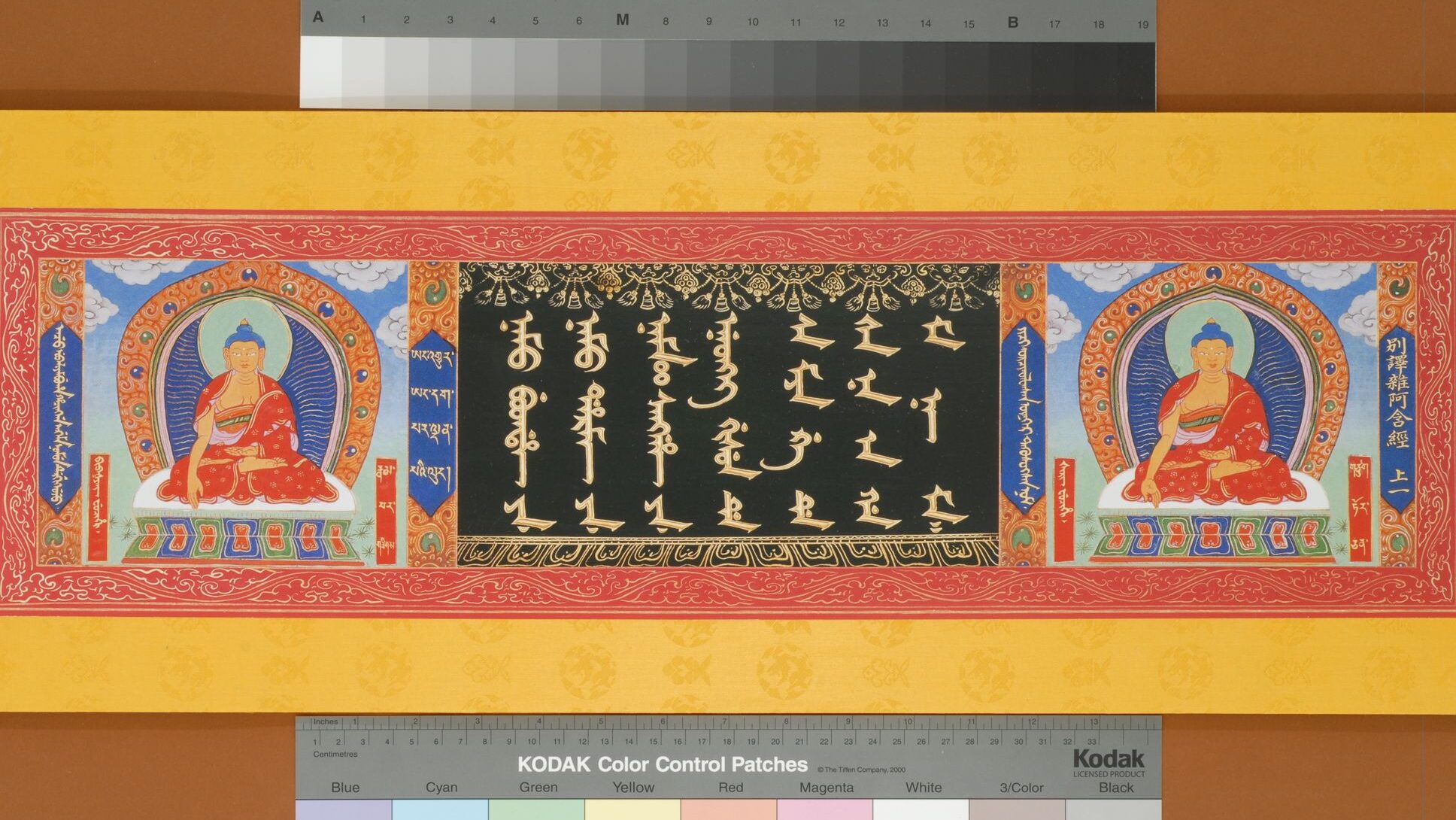
It is widely known that there are two main Buddhist canons in the Mahayana tradition: the Chinese and the Tibetan. These canons are upheld by living Buddhist subcultures that have survived intact and uninterrupted from ancient times up to the present day.
It is less well-known that there are two other Mahayana canons whose written texts survive in complete form: the Mongolian canon and the Manchu canon, written respectively in the Mongolian language and the Manchu language. Mongolia and Manchuria are neighbouring regions in the northern part of East Asia, sandwiched by Kazakhstan to the west and the Sea of Japan to the east.
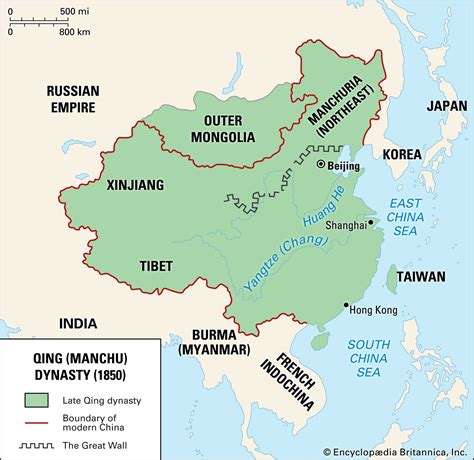
The Mongolian and Manchu languages
The Mongolian language and the Manchu language are not genetically related, but due to millennia of close proximity and mutual influence, they have developed a number of shared features:
- They share a lot of their basic vocabulary, including their pronouns and declensions. (fig 1)
- They have the same basic sentence structure, including heavy use of suffixes, and verbs that fall at the end of the sentence. (fig 2)
- They are written in the same vertical script, which the Mongolians call the “Uyghur script” because they originally inherited it from the Turkic-speaking Old Uyghur people of present-day Xinjiang. (fig 3)
Fig 1: Similarities in basic vocabulary
| English | Mongolian | Manchu |
| I, me | bi | bi |
| you | chi | si |
| he, she, him, her | i | i |
| this | ene | ere |
| that | tere | tere |
| to | -da, -de, etc. | -de |
| from | -aca, -ece | -ci |
| of | -i etc. | -i, -ni |
Note: “c” is pronounced like “ch” in both Mongolian and Manchu.
Fig 2: Similarities in sentence structure
| English | “Thus have I heard: at one time…” |
| Mongolian | “eyin kemen minu sonosughsan nigen chagh-tur…” like.this say-CONV my hear-PERF one time-LOC |
| Manchu | “uttu seme mini donjiha emu forgon de…” like.this say-CONV my hear-PERF one time LOC |
Fig 3: The front page of one of the Mongolian editions of the Vajracchedikā
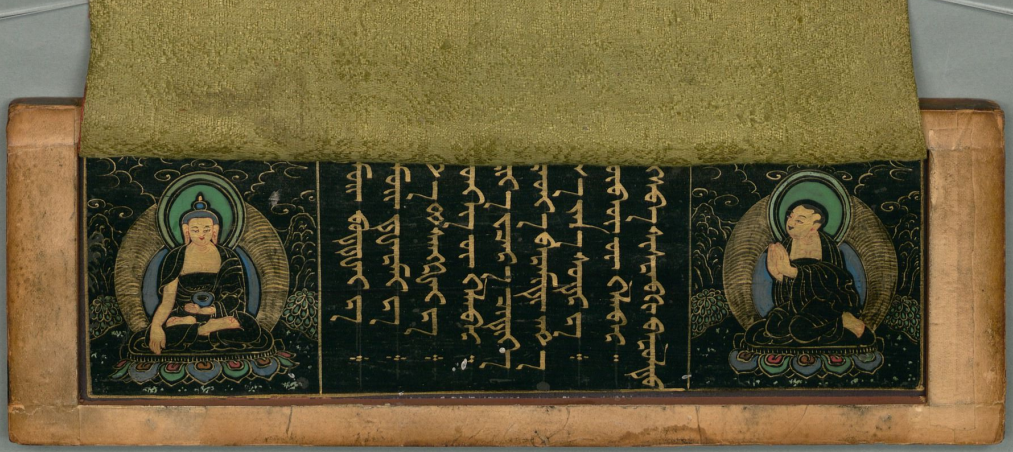
The Mongolian and Manchu canons were not translated from Indic originals. They were translated from the Tibetan and Chinese canons, by interacting with Tibetan and Chinese Buddhists.
The Mongolian canon is a fairly straightforward translation of the Tibetan canon. Its translation choices and its layout mirror the Tibetan canon quite closely. It can be studied to learn about Mongolian Buddhism in its own right, or to better understand and interpret Tibetan texts.
The Manchu canon, on the other hand, is a custom amalgamation:
- its vinaya texts are translated from the Tibetan;
- its sūtra texts are translated from the Chinese;
- and it entirely excludes all śāstra and abhidharma texts.
The Manchu canon was largely created as an empire-building project of the Qianglong Emperor in the late 1700s. At the time, the Manchus were ruling over many Buddhist subjects in the Qing dynasty, but had no Buddhist texts in their own language. The Manchu Canon was ordered by the Qianglong Emperor in 1772, and completed in 1790. However, in a twist of irony, the use of the Manchu language would quickly decline throughout the 1800s as the Manchus increasingly adopted the language of their Chinese subjects. Nowadays the language is critically endangered and rarely studied.
The Manchu Buddhist canon contains 108 cases of texts. Of these, 8 have been digitized and made freely available by the Dharma Drum Institute of Liberal Arts (DILA):
- Cases 1-5, comprising the first 140 fascicles of the Mahāprajñāpāramitā Sūtra;
- Case 57, which includes various sūtras such as the Heart of Prajñāpāramitā;
- Case 59, which includes various sūtras;
- Case 82, which includes the Alternate Translation of the Saṃyuktāgama (T0100) and the other tiny version of the Saṃyuktāgama in one scroll (T0101).
- The text I translate below is from the Alternate Translation of the Saṃyuktāgama.
Marcus Bingenheimer states that case 52 (containing the Vajracchedikā and other sūtras) was also digitized, however it is not currently available on DILA’s website.
Why study Manchu?
Buddhism was never common among the Manchus, and there is no thriving Manchu Buddhist community today, but the Manchu Buddhist texts have survived intact.
People might wonder what point there is in studying the Manchu canon, when the Tibetan and Chinese canons are easily accessible and are much more popular. I can think of several reasons:
- Manchu is written in an alphabet, so it allows you to read the sūtras of the Chinese canon without needing to learn thousands of characters.
- Manchu is often more clear and readable than Chinese, at least for beginners, because it explicitly writes words and parts of speech that would need to be inferred or guessed in Chinese.
- Manchu has a wide body of literature, including translations of basically all the main Chinese classics. It includes Confucian, Daoist, and Buddhist texts; medical, historical, and political texts; Chinese novels, and original Manchu compositions.
- Because the same script is used for Manchu, Classical Mongolian, and Old Uyghur, and because these languages have similar vocabulary and grammar, and were major Buddhist textual languages, learning Manchu’s script will give you easy access to three different under-studied Buddhist textual cultures. Of these three languages, Manchu is the easiest to start with because it has a large body of complete texts (unlike Old Uyghur) and the alphabet is unambiguous (unlike Classical Mongolian).
- The Manchu language is now effectively stateless and critically endangered. By bringing more attention to Manchu and its literature, we can support revitalization and revival efforts. Manchu is part of the unique Tungusic language family, which is genetically distinct from Mongolian, Chinese, Japanese, Korean, or any of the other local language families.
The sūtra that I’ve translated below is not given a specific name. There are no clear text boundaries in the Manchu canon — there is not even whitespace between different sūtras, let alone a title. This sūtra consists entirely of the Buddha praising the arhat Well-Born, describing how he is dignified in both a mundane and a religious way. He describes the path that Well-Born has taken to becoming an arhat, and the qualities that Well-Born now has.
I have translated this sūtra on the basis of the Chinese and the Manchu. I am not an expert in either language — my main background is in Tibetan — so there may be errors in my reading of the text. Nevertheless, I hope that this translation will help to increase awareness of and interest in the Manchu language.
別譯雜阿含經
encu ubaliyambuha hacingga a’gama nomun
Alternate translation of the Saṃyuktāgama
如是我聞: 一時,
(L1) uttu seme mini donjiha emu forgon de/
Thus have I heard at one time:
佛在彌絺羅國菴婆羅園。
(L2) fucihi misala gurun i amara yafan de (L3) tehede.
The Buddha was staying in Amara (Āmrapālī) Park in the country of Misala (Mithilā).
尊者善生初始出家,
wesihungge sayin i banjingga tuktan (L4) booci tucifi/
The honourable Well-Born1 first left home,
剃除鬚髮,
salu funiyehe fusifi
then he shaved his beard and hair,
來詣佛所,
fucihi (L5) jakada jifi.
and approached the Buddha.
頂禮佛足,
fucihi i umuhun de (L6) hengkilefi/
He bowed to the Buddha’s feet
在一面坐。
emu ergide tehe/
and sat to one side.
佛告諸比丘:
fucihi gere (L7) bikcu de hese wasimbume/
The Buddha declared to all the monks:
「此族姓子善生,
ere fujuni (L8) booi jui sayin i banjingga de (L9)
“This son of a reputable family, Well-Born,
有二種端嚴:
juwe hacin i tob hoSonggo babi/ (L10)
has two types of dignity:2
一容貌璝偉,天姿挺特。
emu hacin arbun giru fujurungga ambalinggv (L11) banin gvnin colgoroma tucigebi/
first, his appearance is extraordinary and his natural gifts are exceptional;
二能剃除鬚髮,
jai hacin (L12) salu funiyehe fusime mutefi/
next, he was able to cut his hair and beard,
身服法衣,
beye nomun i (L13) etuku etufi/
and he dressed his body in dharma clothes.
深信家法
booi nomun be Sumin (L14) akdafi/
Trusting deeply in the family dharma,
會歸無常
enteheme akv de dosifi/
he entered into impermanence,
出家學道,
booci (L15) tucifi doro be tacifi[/]
left home, and studied the way.
盡諸煩惱,
eiten ehelinggu (F2 L1) cisu be geterembufi/
Having wiped away all mediocrities (i.e. kleśas),
具足無漏
efujen akv be yooni (L2) yongkiyabufi/
He has entirely completed the flawless.
心得解脫,慧得解脫,
mujilen umesi ukcaha sure umesi ukcaha/
His mind has totally dropped away, his wisdom has totally dropped away.
身證無為,
(L3) beye/ weilen akv be yargiyalafi/
He has personally verified the unconstructed.
生死永盡,
banjin (L4) bucen be enteheme facihiyabuha/
He has forever destroyed birth and death.
梵行已立,
bolgo weilen (L5)emgeri ilibufi/
He already stands in pure conduct.
不受後有。」
amaga i banjin be (L6) alirakv ohobi/
He will not receive future births.”
佛說是已,
fucihi uttu nomulaha manggi/
The Buddha preached like this, and then
即說偈言:
(L7) uthai irgebun irgebume hese fasimbule/
immediately declared in verse:
「比丘常寂定,
(L8) ere bikcu enteheme cibsen teng seme ofi/
This monk is always silent and still (i.e. in equipoise).
除欲離生死,
(L9) buyen be geterembufi/ banjin bucen ci aljahabi/
He has eliminated desire. He has departed from birth and death.
住最後邊身,
(L10) umesi dubei jalan i beyede ili??fi/
He stands in a body for the very last time.
能破於魔軍,
(L11) ari i cooha be efuleme mutehebi/
He has managed to destroy the demon soldiers.
修心斷諸結,
(L12) mujilen be dasafi eiten falibun be lasahalahagge(?)/
He has rectified his mind and cut all knots.
端正無等倫。」
(L13) tob hoSonggo jergi duwali ci tucigebi/
The dignified one has no equal type.”
佛說是經已,
fucihi (L14) uttu nomulaha manggi/
The Buddha preached like this, and then
諸比丘聞佛所說,
geren bikcu fucihi i (L15) nomulaha be donjifi/
all the monks listened to the Buddha’s preaching,
歡喜奉行。
urgunjeme sebjeleme dahame yabuha/
and followed it with joy and delight.
(end)
Discussion
Classical Chinese is known for ambiguity, where words can act as multiple different parts of speech, and the exact interpretation of a line is often debated. You have to develop familiarity with a text’s genre and its particular vocabulary to be able to analyze a sentence properly. If you search a Chinese phrase in an online dictionary, it will often automatically parse the word boundaries incorrectly, which would give you an incorrect understanding of the sentence. An example of this from the above text is in the sentence 身服法衣 (“He dressed his body in dharma clothes”), which the NTI Reader‘s dictionary parses as 身+服法+衣, translating 服法 as “to obey the law”.
Manchu, by contrast, is very precise, and the sentence structure is immediately clear, even for beginners. You will see throughout the text various case markers such as “i” (the genitive) and “be” (the accusative) that show the exact interpretation of a phrase. Looking at the same sentence as above, “he dressed his body in dharma clothes”, the corresponding Manchu reads “beye nomun i etuku etufi/”. The phrase “Nomun i etuku” is a clear genitive phrase meaning “clothes of dharma”, i.e. “dharma clothes”, which is the correct interpretation. The word “dharma” here can thus be easily and correctly understood as a modifier on the word “clothes”, with no sense of “obeying the law” to be found.
A related point is that Manchu verbs have distinctive endings (especially the converb “fi”, which occurs 18 times in the above text) that allow you to immediately recognize them as verbs. This is in contrast to Classical Chinese, which allows for a word to act as a noun in one context and a verb in another. To make things even more difficult, Classical Chinese typically uses no explicit verbal markers at all.
Studying the Manchu also helps narrow down the exact meaning of Chinese words. Both Chinese and Manchu words tend to be polysemous, which means they have multiple meanings. If a Chinese word can have meanings A, B, or C, and the corresponding Manchu word used to translate it can have meanings C, D, or E, then you can be relatively confident that C is the intended interpretation. (Granted, the Manchu can sometimes contain strange or difficult translation choices — it’s not always perfectly clear or accurate.)
My Manchu is not yet at a level where I can offer deeper insights into the translation choices made in this text. I do not yet have an intuitive understanding of the exact meanings and connotations of Manchu words. So, I have tried to constrain my discussion to the syntax of the text.
The use of Manchu as a way to verify the meaning of Chinese texts has a long history beginning with European missionaries in the 1600s. We must be careful, as we do this, not to ignore or erase the unique and standalone value of Manchu as full and rich language in its own right. If this post has piqued your interest in learning more about Manchu, you may want to check out the Manjurist blog and the Manchu Studies Group blog for some further reading. David Porter has written a 21-lesson introductory textbook on Manchu, and a relatively small but growing body of digitized and annotated Manchu texts can be accessed at Manc.hu.
If you have any questions or comments about this post or the Manchu language, please feel free to contact me.
Glossary
DILA has publicized a multilingual Manchu Buddhist glossary, however it is missing many key terms. To address this, I have compiled the following short glossary based on the vocabulary in the above sūtra:
| Manchu | English | Chinese |
| amaga i banjin | future births, rebirth, punarbhāva | 後有 |
| amara | Āmrapālī | 菴婆羅 |
| ari | demon, Māra | 魔 |
| banjin bucen | birth and death, saṃsāra | 生死 |
| bikcu | bhikṣu, monk | 比丘 |
| bolgo weilen | pure conduct, i.e. brahmacaryā; the religious life | 梵行 |
| booci tuci | to leave home, to ordain | 出家 |
| booi nomun | family dharma | 家法 |
| buyen | desire | 欲 |
| cibsen teng seme | silent and still; samādhi or samāhita | 寂定 |
| efujen | flaw, āśrava | 漏 |
| ehelinggu | mediocrities, kleśa | 煩惱 |
| enteheme akv | impermanence | 無常 |
| falibun | knot, saṃyojana or bandhana | 結 |
| fucihi | Buddha | 佛 |
| hengkile | to bow | 頂禮 |
| misala | Mithilā | 彌絺羅 |
| mujilen | mind, citta | 心 |
| sure | intelligence, intellect, wisdom, prajñā | 慧 |
| umesi uca | liberation, vimukti | 解脫 |
| weilen akv | unconstructed, asaṃskṛta | 無為 |
Sources:
- Berzin, Alexander. “The Situation of Tibetan Buddhism in Inner Mongolia 1994”. Accessed October 24, 2025. https://studybuddhism.com/en/advanced-studies/history-culture/buddhism-in-mongolia/buddhism-in-the-mongol-regions-of-china-1994/the-situation-of-tibetan-buddhism-in-inner-mongolia-1994
- Bingenheimer, Marcus. “History of the Manchu Buddhist Canon and First Steps towards its Digitization”. 2014. Accessed October 24, 2025. https://mbingenheimer.net/publications/bingenheimer.2014.historyOfTheManchuCanon.pdf
- Case 82 of the Manchu Buddhist Canon as digitized by DILA (Dharma Drum Institute of Liberal Arts, Taiwan). Pages 1 and 2.
- Taisho Daizokyo: T0100, scroll 1, text 1, as found on NTI Reader: https://ntireader.org/taisho/t0100_01.html
Footnotes: